Building wealth · 01 / 04
Contributions and allocation
How regular saving and a sustainable allocation connect income to long-term wealth building.
The concept
Building wealth begins with a simple flow: income, spending, saving, and investing. Contributions are the amounts added over time; allocation determines how that money is divided among cash, bonds, equities, and other assets.
These choices reinforce each other. Regular contributions increase the capital at work, while an appropriate allocation seeks a balance between growth, stability, and access to funds.
Why it matters
Early in the journey, saving behaviour can matter more than small differences in investment returns. Consistency reduces reliance on finding the “right time” and turns an intention into a repeatable habit.
Allocation determines which risks you accept. It should reflect your goals, horizon, liquidity needs, and both your financial and emotional ability to withstand declines.
A simple example
Someone directs €250 each month towards long-term goals. Instead of changing course with every headline, they automate the contribution and review the allocation on planned dates.
After one year, contributions total €3,000 before any gain, loss, fee, or tax. The example only illustrates the process; market outcomes remain uncertain.
What to examine
- savings rate and consistency of contributions;
- emergency reserves and near-term cash needs;
- time horizon and priority of each goal;
- exposure to the largest holdings, sectors, countries, and currencies;
- fees, taxes, and overlap between funds;
- drift from the intended allocation.
Diversification reduces shared dependencies; it is not merely a longer list of holdings. A portfolio with many similar positions can remain concentrated.
Common mistakes
Investing without a cash buffer, taking more risk to catch up, and concentrating too heavily in one company, sector, or country can all make a plan fragile.
Stopping contributions after a decline or continually redesigning the allocation is also common. A review is useful when goals or circumstances change, not simply because markets feel uncomfortable.
Next step
Set one goal, a time horizon, and a realistic contribution. Separate money needed soon, then choose an allocation simple enough to understand and maintain.
Record when you will review the plan and which changes would justify an adjustment. Sustainable progress links income, saving, and wealth; it does not depend on promised returns.
Recommended reading
A few books that can help you go deeper on this topic.
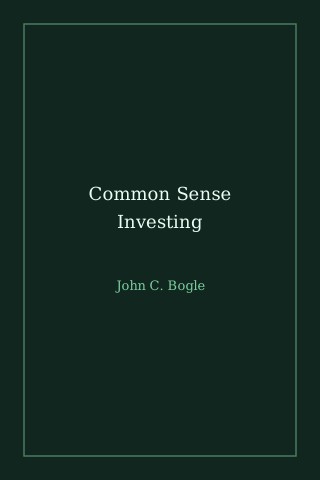 The Little Book of Common Sense Investing
John C. Bogle
A clear case for broad diversification, low costs, and patience in investing.
Why this book? Useful when you want to see why time and simplicity matter more than noise.
View book
Keep learning
How debt costs interact with saving, risk, and long-term wealth building.
A practical definition of financial independence based on choices, spending, and income sources.
Learn is general educational content. It is not personalised advice and does not guarantee outcomes.